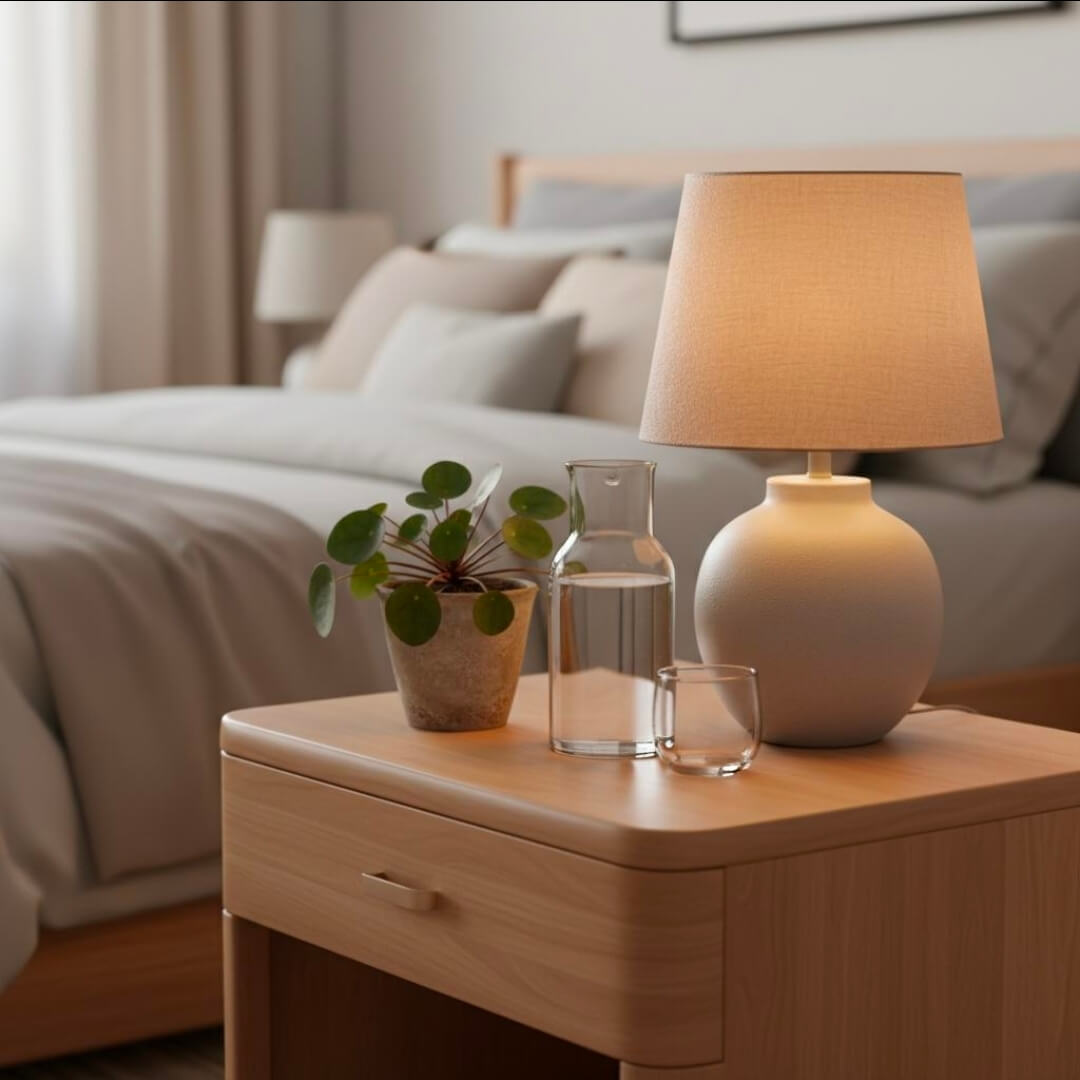
Sleep is the elusive sanctuary we all crave. For me, getting better sleep started when I stopped chasing it and began giving my evenings a proper wind-down routine.
Nothing about my routine is fancy, and it didn’t come from following a perfect schedule I found online. These are simply the little things I do night after night that have helped make my evenings calmer and my nights more comfortable.
From turning off the TV to listening to brown noise and adjusting my bedding with the seasons, I’ve discovered that small, consistent habits can make a difference in how I wind down.
Here’s a look at my nighttime routine and the simple habits that work for me.
This post contains affiliate links. As an Amazon Associate, I earn from qualifying purchases. If you buy through my links, it costs you nothing extra.
My Evening Wind-Down Routine
My evening wind-down begins at 9:30 p.m., when the TV goes off. After that, I check and respond to my emails, take my vitamins, and fill my water bottle to bring to my bedroom.
I tend to get thirsty during the night, and a dry throat has woken me up choking before. Because of that, keeping a water bottle beside my bed is non-negotiable. It comes with me every single night.
Next comes my personal care routine: a hot shower, brushing my teeth, and changing into my pajamas.
Before settling in, I check and refill my humidifier, turn on my brown noise, switch off the lights, and get comfortable in bed. On most nights, when I’m not working on a project, I’m in bed by 11 p.m.
The order matters less than the rhythm. Doing the same small things in roughly the same order helps me mentally switch off from the day. Sometimes, that familiar sense of routine is exactly what I need to begin relaxing.
What I Do When I Can’t Fall Asleep
Even with a routine, some nights are more difficult than others. When sleep doesn’t come, I’ve learned that lying in the dark and getting frustrated doesn’t help me.
Sometimes, I turn the lights back on and listen to my brown noise for a reset. I try not to reach for my phone because scrolling has never once helped me fall asleep faster.
I also have a personal rule: if I’m still awake after about an hour, I get up and make myself a cup of tea. Rather than continue lying in bed feeling frustrated, I give myself a quiet moment to relax.
Caffeine doesn’t seem to bother my sleep, so I’ve found that tea works for me. However, everyone’s sensitivity is different. If caffeine affects your sleep, a caffeine-free herbal tea may be a better choice.
The goal isn’t to force sleep to happen. It’s to take some of the pressure off and give myself a chance to feel relaxed again.
Why I Keep My Evenings Gentle
One thing I’ve learned the hard way is that an intense evening workout can make it much harder for me to fall asleep.
When I overdo a workout late in the day, I feel as though my body is still switched on long after I’ve finished. Even my brown noise doesn’t seem to help me settle down quickly.
Because of this, I try to keep my evenings gentle. I still appreciate the benefits of movement, but I prefer to do more demanding activities earlier in the day when possible.
Everyone responds to exercise differently, so this is about finding what works for your own body. For me, a calmer evening makes it easier to transition from the busyness of the day to bedtime.
How I Adjust My Bedroom for Summer and Winter
My bedroom routine changes with the seasons. What feels comfortable on a warm summer night isn’t necessarily what I need when temperatures drop.
Summer: Light Bedding and a Dark Room
During warmer weather, I wear light sleepwear and use lighter bedding with a blanket. I also sleep with the windows open at night and close them in the morning to help keep the room cool, depending on the weather and outdoor conditions.
One of my favourite bedroom purchases has been blackout curtains.

In summer, it can start getting bright around 4 a.m. The early morning light used to be a challenge, but my blackout curtains help keep the bedroom dark enough for me to continue sleeping.
It’s a simple change, but it’s made my bedroom more comfortable during the brighter months.
This post contains affiliate links. As an Amazon Associate, I earn from qualifying purchases. If you buy through my links, it costs you nothing extra.
Winter: Warm Pajamas and Comfortable Bedding
When the weather turns cold, I switch to warm pajamas and a duvet.
I try not to overheat my bedroom because I’ve found that a room that’s too warm makes it difficult for me to sleep comfortably. I prefer to keep the room at a comfortable temperature and use suitable bedding to stay warm.
If the room gets particularly cold, I sometimes use a portable heater to take the chill off. I follow the manufacturer’s safety instructions, keep the heater well away from bedding and other combustible materials, and only use it as directed. I don’t assume that a heater is safe to leave running unattended simply because it has a timer.
For me, the aim is to stay warm without making the room stuffy or uncomfortably hot.
Whether it’s summer or winter, my bedroom comfort comes down to three things: a cool, dark, and comfortable space.
My Simple Habits for Better Sleep
Looking back, I’ve realized that my nighttime routine isn’t built around one magical solution. It’s a collection of small habits that help me wind down.
Here are the things I try to be consistent with:
- Turn off the TV at 9:30 p.m. This marks the beginning of my evening routine.
- Keep water beside the bed. I like knowing I can take a drink when I need one.
- Follow a simple personal care routine. A shower and clean pajamas help me feel ready for bed.
- Use my humidifier and brown noise. These are part of the environment I’ve created to make my bedroom feel comfortable.
- Avoid unnecessary phone use at bedtime. I prefer to give myself a break from scrolling when I’m trying to relax.
- Keep evening activities gentle. Intense workouts too close to bedtime don’t work well for me.
- Adjust my bedding with the seasons. Lightweight bedding in summer and a warm duvet in winter help me stay comfortable.
- Keep the bedroom dark and at a comfortable temperature. My blackout curtains are particularly helpful during the long summer days.
You don’t have to adopt every habit at once. Start with one or two changes that suit your lifestyle and see how you feel.
Final Thoughts: Creating a Nighttime Routine That Works for You
Good sleep, for me, isn’t about finding one magic trick. It’s about a handful of small, consistent habits: turning off the TV at 9:30, keeping my water bottle nearby, taking a shower, turning on my humidifier and brown noise, and creating a bedroom that stays cool and dark.
None of these things is particularly dramatic on its own, but together, they’ve made my nights quieter and my mornings feel kinder.
Your routine doesn’t have to look like mine. Perhaps it’s reading a few pages of a book, listening to calming music, preparing your bedroom for the night, or simply giving yourself permission to slow down.
The important thing is to discover what helps you feel comfortable and relaxed.
I’d love to hear from you! What’s one thing you never skip in your nighttime routine? Share your favourite wind-down habit in the comments.
Please remember that these are personal experiences, not medical advice. If you regularly struggle to sleep or your sleep difficulties affect your daily life, consider speaking with a healthcare professional.
Frequently Asked Questions
What can I do when I can’t fall asleep?
When I can’t fall asleep, I sometimes turn the lights back on and listen to brown noise while giving myself a chance to reset. I also try to avoid reaching for my phone. If I’m still awake after about an hour, I get up for a quiet activity, such as making a cup of tea, rather than remaining in bed feeling frustrated. If sleeplessness happens frequently, it may help to discuss it with a healthcare professional.
Does drinking tea at night keep you awake?
Not necessarily. Caffeinated tea can interfere with sleep for people who are sensitive to caffeine, while others may notice little effect. Caffeine-free herbal tea is an alternative if you prefer a warm drink before bed. For me, tea doesn’t seem to affect my sleep, but individual experiences vary.
Do blackout curtains help you sleep better?
Blackout curtains help reduce the amount of outside light entering a bedroom. I’ve found them particularly useful during summer, when the sky starts getting bright around 4 a.m. Keeping my room dark makes it easier for me to stay comfortable while I sleep.
Should your bedroom be warm or cool for sleep?
A comfortably cool bedroom works best for me. I prefer using appropriate sleepwear and bedding rather than overheating the room. The ideal temperature can vary from person to person, so aim for an environment where you feel comfortable throughout the night.
Is brown noise helpful for sleep?
I include brown noise in my nighttime routine because I find it helps create a consistent, calming background in my bedroom. People respond differently to background sounds, so you can experiment with brown noise, white noise, gentle music, or silence to discover what you prefer.