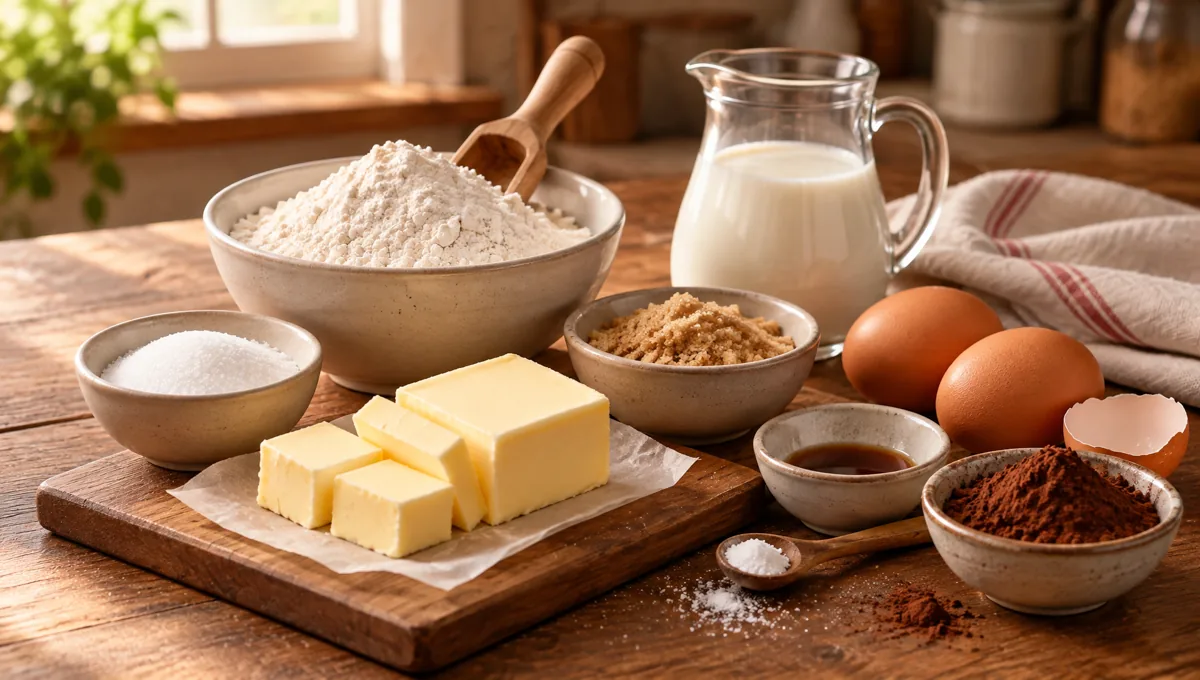
Baking looks simple on paper — flour, sugar, butter and eggs. But sometimes, the smallest details make the biggest difference between a soft, golden cake and one that sinks, turns out dry or sticks to the pan.
If your homemade bakes haven’t been turning out quite the way you hoped, you might be making one of these seven common baking mistakes.
The good news? They’re all easy to fix, and once you understand what to watch out for, you’ll feel much more confident in the kitchen.
1. Measuring Flour the Wrong Way

One of the most common baking mistakes is scooping flour directly from the bag using a measuring cup.
This can pack the flour down, giving you more than the recipe actually calls for. Too much flour can make cakes dense, dry and heavy.
How to fix it: Spoon the flour gently into your measuring cup and level the top with a straight-edged knife. Avoid tapping or shaking the cup to settle the flour.
For more accurate results, use a kitchen scale. One cup of all-purpose flour is approximately 120–125 g, depending on how it is measured.
2. Not Preheating the Oven
Putting your cake into an oven that hasn’t reached the required temperature can affect how it rises and bakes.
Cakes need the correct oven temperature from the beginning to develop their structure properly. Baking powder and baking soda also rely on chemical reactions that contribute to the rise.
How to fix it: Always preheat your oven to the temperature specified in your recipe. Wait until your oven indicates that it has reached the correct temperature before putting your cake inside. If your oven runs hot or cold, an oven thermometer can help you check its accuracy.
3. Opening the Oven Door Too Often
I know it’s tempting to keep checking on your cake, especially when it starts smelling delicious!
However, opening the oven door repeatedly allows heat to escape and causes the temperature to fluctuate. If your cake hasn’t developed enough structure, this can contribute to sinking in the middle.
How to fix it: Use your oven light to check on your cake through the glass. Avoid opening the door during the early stages of baking. When it’s close to the recommended baking time, you can open the door briefly to test whether it’s ready.
4. Using Cold Ingredients When the Recipe Calls for Room Temperature

Have you ever started baking straight from the refrigerator?
Cold butter doesn’t cream as effectively with sugar, which can affect how much air gets incorporated into your batter. Cold eggs and milk can also make a creamed mixture look curdled or uneven.
How to fix it: Take your butter, eggs and milk out of the refrigerator about 30–60 minutes before baking, depending on the temperature of your kitchen.
If you’re short on time, place your eggs in a bowl of warm (not hot) water for about 5–10 minutes. You can also cut cold butter into small cubes to help it soften more quickly.
5. Overmixing After Adding the Flour

Mixing is important, but more mixing doesn’t necessarily mean better baking.
Once flour is added to a batter, excessive mixing develops gluten. Too much gluten development can make cakes tougher and less tender.
How to fix it: Once you add the flour, mix gently and only until the dry ingredients are incorporated. Scrape down the sides of your bowl to catch any unmixed flour, but avoid unnecessary stirring.
6. Using the Wrong Baking Pan or Skipping the Lining

The size and preparation of your baking pan can affect how your cake turns out.
A pan that’s too large can produce a thinner cake that bakes faster, while a pan that’s too small can cause the batter to overflow. Skipping the greasing and lining can also leave you struggling to remove your cake.
How to fix it: Use the pan size specified in your recipe whenever possible. Grease the pan properly and line the bottom with parchment paper.
If you need to use a different pan size, remember that the baking time may also need adjusting.
7. Trusting the Timer Instead of Testing Your Cake

A recipe might say to bake a cake for 35 minutes, but that doesn’t mean every oven will produce the same result in exactly 35 minutes.
Ovens vary, and factors such as pan material, pan size, and batter depth can affect baking time.
How to fix it: Start checking your cake a few minutes before the suggested baking time is over.
Insert a toothpick into the centre. If it comes out clean or with a few moist crumbs, your cake is generally ready. The top should also spring back gently when lightly pressed.
If the toothpick comes out with wet batter, give the cake a little more time.
Final Thoughts
Everyone makes baking mistakes, especially when learning. Even experienced home bakers occasionally have cakes that don’t turn out as expected!
The important thing is understanding what went wrong and knowing what to change next time.
Start by paying attention to how you measure your ingredients, prepare your oven and mix your batter. These small adjustments can make a noticeable difference in your baking.
And remember, practice makes progress. The more you bake, the more confident you’ll become.
Which of these baking mistakes have you made before? Let me know in the comments!
Frequently Asked Questions
Why did my cake sink in the middle?
A cake can sink because it was underbaked, the oven door was opened too early, too much leavening was used, or the oven temperature was incorrect. Make sure you measure your ingredients accurately and allow the cake to bake long enough for its structure to set.
Can I fix cake batter that has been overmixed?
Unfortunately, you can’t reverse gluten development once it has happened. You can still bake the cake, but it may have a tougher texture. Next time, mix gently once you add the flour.
Do I really need to preheat my oven before baking?
Yes. Preheating helps your cake begin baking at the correct temperature, which is important for proper rising and setting.
Is a kitchen scale worth buying for baking?
Absolutely! A kitchen scale helps you measure ingredients more consistently, especially flour. One cup of all-purpose flour is approximately 120–125 g, depending on how it is measured.